Booking choice: The private Tokyo Toilet walking tour, from $168 per group. Check dates Tour details
You do not need a tour to see the Tokyo Toilet. Every one is a public toilet in a park or on a street corner, free and open to anyone. What a tour saves you is the planning, and this page does that part. The 17 fall into five areas, and a single IC card on the trains links them.
Below is the route we would walk, area by area, with the nearest stations, what to look for at each toilet and how long to allow. At the end: when a guided tour is the better buy.
The quick answer
Split the 17 into five areas: Sasazuka and Hatagaya, Yoyogi and Tomigaya, Harajuku and Jingumae, Shibuya and Shoto, Ebisu and Hiroo. Allow a full day for all of them with short train hops, or half a day for two areas. For a short version with a private guide, the private walking tour covers the highlights from Yoyogi to Shibuya, from $168 per group for up to four.
Can you visit the Tokyo Toilets on your own?
Yes. They are free public toilets run by Shibuya City, with no ticket and no booking. The official Tokyo Toilet site has a map with all 17.
Nothing stops you walking up to any of them. That is the point of the project: they serve parks and streets, so the neighbors use them every day. A few things make a self-guided day go well:
- Load an IC card. Suica or PASMO covers every train and subway on this route; you tap in and out and never buy a ticket.
- Save the addresses. Copy the 17 addresses from our Tokyo Toilet list into your map app, adding Shibuya after each.
- Be a good visitor. These are working toilets. Wait for people to come out before photos, keep the path clear, and never film a cubicle in use.
- Carry a hand towel. Japanese public toilets often have no paper towels. See Japanese toilet etiquette for the rest.
The official pages list no opening hours. The glass and lantern toilets look best after dark, but daylight is kinder for walking between small parks and residential streets.
What is the best self-guided route for the Tokyo Toilet?
Go west to east: start at Sasazuka on the Keio Line, work through Hatagaya and Yoyogi, cross Harajuku and Shibuya, and finish in Ebisu and Hiroo. That order keeps the train hops short.
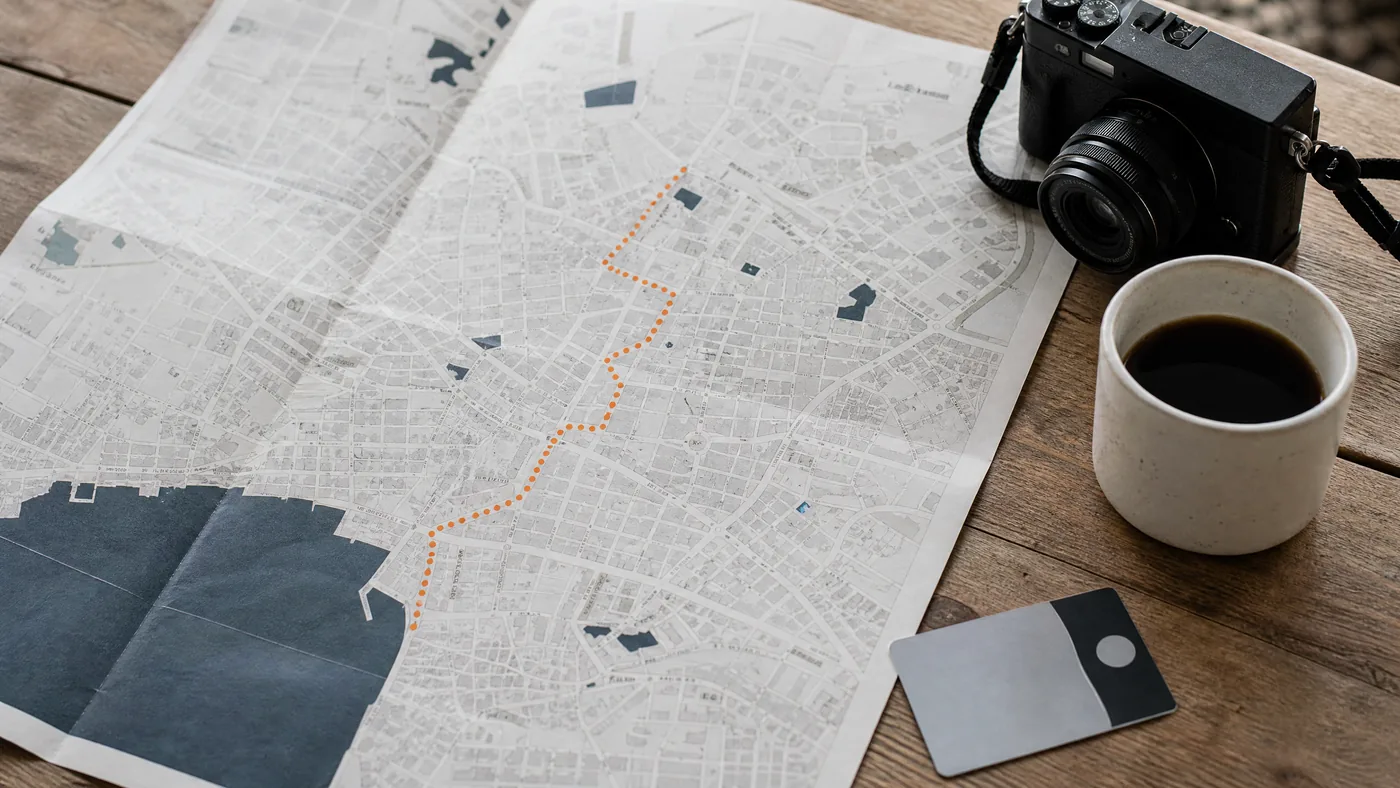
The toilets lie in a long arc through Shibuya City. This table is our route, area by area, with the stations to use and a rough time to allow for walking and looking:
| Area | Toilets | Stations | Allow |
|---|---|---|---|
| Sasazuka and Hatagaya | Sasazuka Greenway, Hatagaya, Nanago Dori Park, Nishihara Itchome Park | Sasazuka, Hatagaya (Keio Line, Keio New Line) | About 1.5 hours |
| Yoyogi and Tomigaya | Nishisando, Yoyogi-Hachiman, Haru-no-Ogawa, Yoyogi Fukamachi Mini Park | Yoyogi-Hachiman (Odakyu), Yoyogi-koen (Chiyoda) | About 1.5 hours |
| Harajuku and Jingumae | Urasando, Jingumae, Jingu-Dori Park | Kitasando, Meiji-jingumae, Harajuku | About 1 hour |
| Shibuya and Shoto | Nabeshima Shoto Park | Shibuya | About 45 minutes |
| Ebisu and Hiroo | Higashi Sanchome, Ebisu Station West Exit, Ebisu Park, Ebisu East Park, Hiroo East Park | Ebisu, Hiroo (JR, Hibiya Line) | About 1.5 hours |
The times are our planning estimates, not official figures. Kanpai, a Japan travel site, suggests about two hours for each half of Shibuya and half a day for all 17, which works if you move fast. With photos, a coffee and a shrine stop, a relaxed full day is more realistic. If you have only a morning, do Yoyogi and Harajuku: Shigeru Ban, Toyo Ito, Marc Newson, NIGO and Tadao Ando within walking distance.
How do you see the Sasazuka and Hatagaya toilets?
Take the Keio Line from Shinjuku to Sasazuka, see Junko Kobayashi's toilet under the tracks, then walk east to Hatagaya for the voice-controlled toilet, the "...With Toilet" and the lantern at Nishihara.
This is the quietest area of the walk, all low houses, shopping streets and the green strip along the railway. Four toilets:
- Sasazuka Greenway, Junko Kobayashi. Under the elevated Keio Line by Sasazuka Station: round weathering-steel toilets of different heights under a big yellow oval awning, with rabbit silhouettes peeking from the round windows.
- Hatagaya, Miles Pennington and the UTokyo DLX Design Lab. By the crossing of Nakano-dori and Suido-doro. A tall open room of about 5 m, with the toilets tucked around it, built to double as a pop-up shop, gallery or meeting space.
- Nanago Dori Park, Kazoo Sato. About two minutes from Hatagaya Station, according to Tokyo Cheapo. The "Hi Toilet" opens, flushes and plays ambient sounds by voice; you never touch a button.
- Nishihara Itchome Park, Takenosuke Sakakura. In the residential streets north of the Keio tracks, a bright, open toilet that glows like an andon lantern at night.
From Hatagaya, the Keio New Line runs one stop east to Hatsudai, on the way to Nishisando.
Rather not navigate? The Perfect Days tour from Hachiko links Shibuya, Harajuku, Yoyogi and Ebisu with a guide, at an easy mix of walking and gentle jogging.
Check dates for the Tokyo Toilet Tour for Perfect DaysHow do you see the Yoyogi toilets by Shigeru Ban and Toyo Ito?
From Sou Fujimoto's white basin at Nishisando, walk south to Yoyogi-Hachiman, where Toyo Ito's mushrooms sit below the shrine, then on to Shigeru Ban's two glass toilets by Yoyogi-koen Station exit 3.
- Nishisando, Sou Fujimoto. The last of the 17 to open. A pure white vessel with hand-washing basins at different heights around a hollow center, with the Shinjuku towers behind it, as Nippon.com describes it.
- Yoyogi-Hachiman, Toyo Ito. Three mushroom-shaped toilets on Yamate-dori at the foot of the steps to Yoyogi Hachimangu shrine. Climb up: this is the shrine where Hirayama eats his lunch in Perfect Days. Yoyogi-Hachiman Station on the Odakyu Line is a short walk.
- Haru-no-Ogawa Community Park, Shigeru Ban. Colored glass in a small park; J-CAST News reported in 2022 that this one was set to stay opaque after a fault.
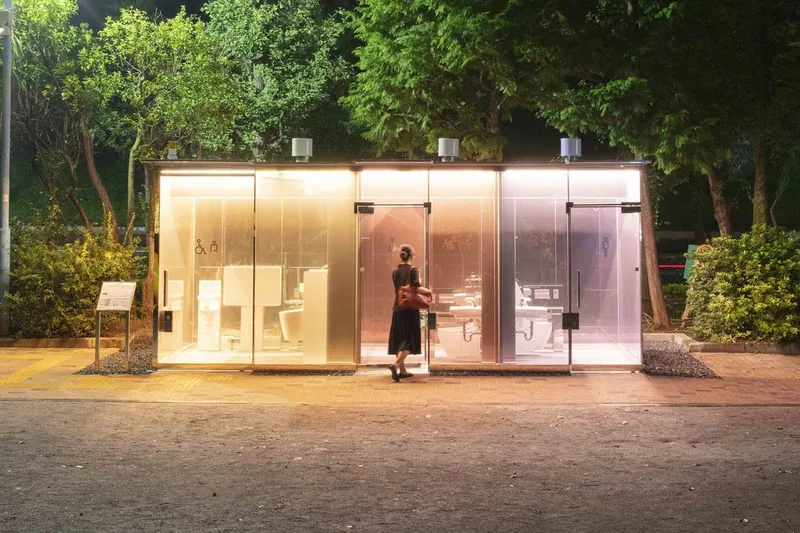
- Yoyogi Fukamachi Mini Park, Shigeru Ban. Outside exit 3 of Yoyogi-koen Station on the Chiyoda Line. Clear glass when empty, frosted when you lock the door. This is where most visitors gasp.
The two Ban toilets are a few minutes apart. Come back here after dark if you can, when they glow like lanterns.
Start right here with a private guide: Shigeru Ban's glass toilet, Yoyogi Hachimangu Shrine, Miyashita Park, past Shibuya Crossing and on to Kengo Kuma's forest toilet.
Explore the private Tokyo Toilet walking tour Tour detailsHow do you see the Harajuku and Jingumae toilets?
Walk down Meiji-dori from Kitasando: Marc Newson's copper roof under the expressway, NIGO's little house a few blocks on, then Tadao Ando's round shelter at Jingu-Dori Park toward Shibuya.
- Urasando, Marc Newson. Under the Metropolitan Expressway near the Kitasando crossing on Meiji-dori. A copper roof in the minoko style of shrines and tea rooms, meant to weather into the city, and an all-green interior.
- Jingumae, NIGO. "THE HOUSE", on a Harajuku corner of Meiji-dori: a nostalgic small home with ceiling fans and plenty of daylight inside.
- Jingu-Dori Park, Tadao Ando. Between Harajuku and Shibuya stations. Amayadori, a round toilet under a wide roof that juts out as a rain shelter, wrapped in vertical louvers you can walk right through.
This stretch has the most to see between toilets: Harajuku's side streets, Omotesando's boulevard of designer buildings and Miyashita Park near the end. For the architecture beyond the toilets, read our Shibuya architecture walk.
How do you see Kengo Kuma's toilet in Shibuya?
Walk about ten minutes west from Shibuya Station, up the slope into the Shoto residential district, to Nabeshima Shoto Park. Kuma's five cedar huts stand among the trees.
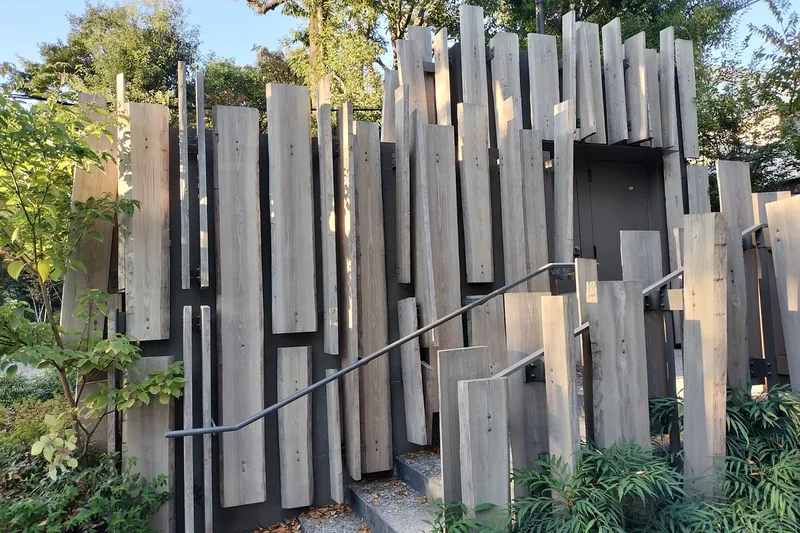
It is the calmest stop of the day, and it feels a world away from Shibuya Crossing. Kuma called it "A Walk in the Woods": five small huts clad in cedar slats set at random angles, each with its own layout for families, wheelchair users or a quick change, joined by a path that fades into the park's trees. Tokyo Updates notes a children's toilet here too.
Take a seat on a bench for five minutes. The park has a small pond and old trees, and in late November the leaves are turning. It is also the last stop of the private walking tour, which reaches it on foot after Miyashita Park and a pass across Shibuya Crossing.
A three-hour small-group walk with a storyteller: the film's designer toilets around Yoyogi, Harajuku's Takeshita Street and Sugamo's old shopping street.
Check dates for the Perfect Days movie walkHow do you see the Ebisu and Hiroo toilets?
Take the JR Yamanote Line one stop from Shibuya to Ebisu: three toilets are a short walk from the station, Nao Tamura's is on the way, and Tomohito Ushiro's is one stop on at Hiroo.
- Higashi Sanchome, Nao Tamura. On a small triangular lot along the railway between Shibuya and Ebisu: three separate spaces in a form inspired by origata, Japanese gift wrapping.
- Ebisu Station West Exit, Kashiwa Sato. "WHITE", a clean white box beside the police box at the west exit. You cannot miss it.
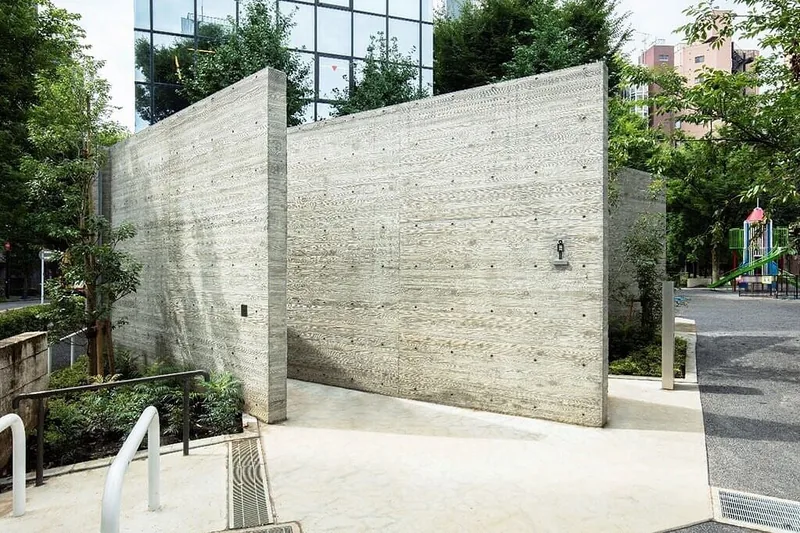
- Ebisu Park, Masamichi Katayama / Wonderwall. "Modern Kawaya": 15 concrete walls set at random, with gaps that lead to the toilets, after the old Japanese huts over a river.
- Ebisu East Park, Fumihiko Maki. The "Squid Toilet" in the park locals call Octopus Park, a pavilion with a rest area and a playful roof.
- Hiroo East Park, Tomohito Ushiro. A few minutes from Hiroo Station on the Hibiya Line, one stop from Ebisu. A light sculpture of a toilet that never repeats a pattern.
Ebisu is a good place to end: plenty of cafes and restaurants around the station. If you finish in Shibuya instead, the Shibuya evening food tour is a warm way to close the day.
How long does a Tokyo Toilet walk take, and when is a guided tour better?
Allow a full day for all 17, or two to three hours for one or two areas. A guided tour is the better buy when you have half a day, want the stories behind each design or would rather not navigate.
The official sites give no time for a full circuit, so here is the practical picture. The 17 are spread over many kilometers; a running club route through all of them, listed on the Fastest Known Time site, is about 33 km. On foot with trains between the areas, a relaxed full day is right. Tokyo Weekender reported that a dedicated bus course for all 17 took about four hours, and that was by road.
Late November has short days: the sun sets around 16:30, so start by 09:00 if you want all five areas in daylight and save the glass toilets for after dark. Train fares on this route are small, a few hundred yen per hop on an IC card. Food is your only other cost.
A guided tour makes sense in four cases:
- You love the film. The Perfect Days tour from Hachiko and the movie walk from Yoyogi tie each toilet to the story.
- You have a small group and a morning. The private walking tour is $168 per group for up to four, in 2.5 hours.
- You want the most toilets with the least walking. The private minivan picks you up at your hotel and lists stops from Sasazuka to Hiroo, $335 per group for up to two.
- You want the city's architecture too. The private car tour adds landmark buildings to the toilets over a full day.
All of them have free cancellation up to 24 hours before.
A private minivan with hotel pickup: Kuma, Ando, Newson, Fujimoto, Kobayashi, Kazoo Sato, Ito and Ban's glass toilet, then Ebisu and Hiroo, with water and wifi on board.
Explore the private Tokyo Toilet tour by minivan Tour detailsFrequently asked questions
How long does it take to see all 17 Tokyo Toilets?
Plan a full day on foot with short train rides between five areas. Half a day covers two areas, such as Yoyogi and Harajuku.
Do I need a ticket to visit the Tokyo Toilets?
No. They are free public toilets in Shibuya City, open to anyone, with no booking. Only the guided tours are paid.
What is the best time of day for the Tokyo Toilet walk?
Walk in daylight for the parks and backstreets, and save Shigeru Ban's glass toilets in Yoyogi for after dark, when they glow like lanterns.
Which station is closest to the transparent toilet?
Yoyogi-koen Station on the Chiyoda Line: the Yoyogi Fukamachi Mini Park toilet is just outside exit 3.
Ready to book
Choose your tour
Free cancellation up to 24 hours before on every option. Prices are from-prices in USD and move with the season.
Private Tokyo Toilet Walking Tour
- Private guide, no other groups
- Shigeru Ban's transparent toilet
- Yoyogi Hachimangu Shrine
Tokyo Toilet Private Tour by Minivan
The widest spread of toilets in one outing, with hotel pickup
The Tokyo Toilet Tour for Perfect Days
- Guided route through Shibuya, Harajuku, Yoyogi and Ebisu
- Designer public toilets from Perfect Days
- A Shinto shrine visit